
Crystal never planned to become a mother at 22. On her birthday, as she filled out graduate school applications and mapped out the next decade of her life, she took a pregnancy test — almost as an afterthought. It was positive.
“I was absolutely devastated,” she recalls. “I did not want to be pregnant. I did not want to be a mom.”
Her husband was in the military, a deployment was looming, and they were living far from family in a small military town in Idaho. Money was tight. Support was limited. Everything felt stacked against her.
And yet, despite fear, trauma and overwhelming circumstances, abortion never felt like an option.
Raised to believe every life has value
Crystal grew up in a small town in Oregon, in a family where the value of human life was not abstract — it was lived out daily.
Her father, once pro-choice, changed his views in college after researching fetal development for a paper.
“He started off the paper pro-choice and he ended up the paper pro-life,” Crystal says. “He just couldn’t deny what he had seen and the scientific proof of life in the womb.”
Her parents raised their children with a strong pro-life worldview rooted in both faith and biology. One of Crystal’s earliest memories is standing at a pro-life rally in Oregon, holding a sign that read abortion kills children.
That belief later shaped her family’s actions. When Crystal was 8 years old, her parents fostered children born to drug-addicted parents.
Homeschooled and deeply rooted in her Christian faith, Crystal grew up seeing life born — and valued — all around her, from livestock on their property to children welcomed into their home.
“It was obvious to me,” Crystal says. “If life in my cow’s womb has value, why wouldn’t life in a human womb [have] value?”
An unplanned pregnancy — and overwhelming fear
Crystal married young at 19 years old to a military servicemember. By 21, she had graduated college and was preparing for graduate school.
Then came the positive pregnancy test.
“All I could [think] was that my husband was going to be gone,” Crystal says.


She struggled with severe morning sickness, barely gaining weight for months. And while the pregnancy itself was healthy, her labor and delivery were deeply traumatic.
Six months after giving birth to her son, Jack, her husband deployed. Crystal was left alone with limited community to lean on, navigating postpartum trauma, chronic pain, and a high-needs infant with little physical support.
Healing, growth and the chance for change
Despite her circumstances, Crystal says she never viewed abortion as a solution.
“To me, it would have been killing my child,” she says. “My baby was already their own person with their own DNA. Making a permanent decision to solve a temporary setback doesn’t make sense.”

As time passed, Jack grew, his pain was eventually diagnosed and treated, Crystal began healing from birth trauma, and her husband returned before Jack’s first birthday.
“Things change,” Crystal says. “But if I had an abortion, I wouldn’t have even had the chance for any of that to change.”
Life didn’t end — it expanded
Today, Crystal’s life looks nothing like the future she feared losing.
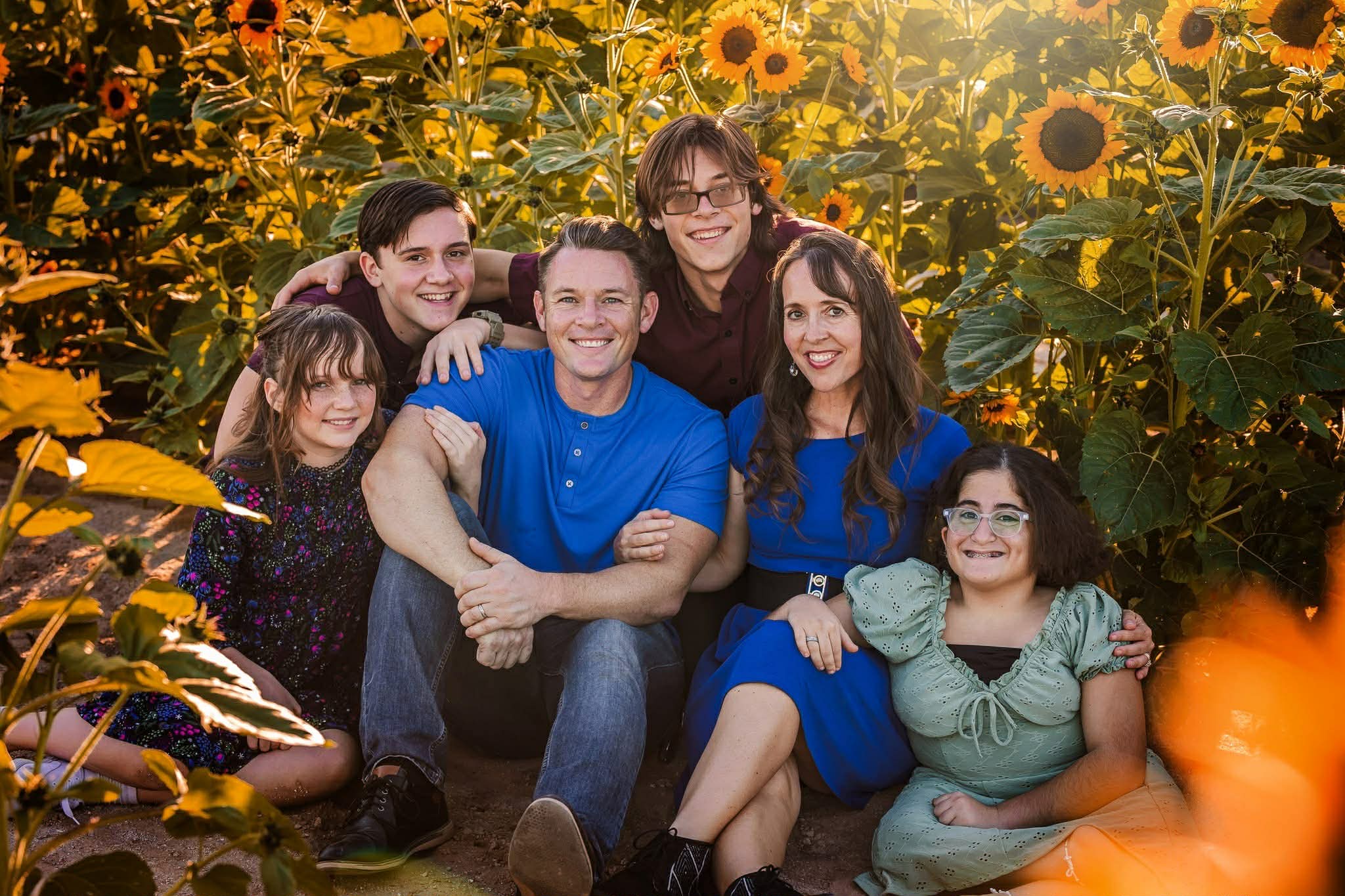
She and her husband have been married for 21 years. They have four children, including an adopted child with special needs.
They lived overseas in Europe, navigated deployments, and opened their home to exchange students from around the world.

Crystal earned her master’s degree while raising her children and living abroad.
She now works as a journalist, musician and university professor, while her husband is involved in politics. Jack, now 18, attends the same college where Crystal teaches.


Crystal’s encouragement to those facing an unplanned pregnancy:
“Don’t let a temporary circumstance affect your permanent decision. Your circumstances will change. Women are so much stronger than we know. We can do more than we think we can – and that includes letting a child live. We don’t have to keep the child, [but] we can give the child to somebody else and give them a second chance at life. We’re really underestimating ourselves when we abort because we’re saying we’re not strong enough – but in reality we are. I was exactly who the abortion industry would prey on. I was young, I didn’t want to be a mom, I didn’t want to be pregnant, we weren’t in the best financial situation, I had no nearby family support, I had career goals and aspirations, and my husband wasn’t going to be around. But I knew my baby was already their own person with their own DNA.”
Written by Melina Nicole
Leave a Reply